St Gregory’s Church, Castlemorton
Standing at the heart of the beautiful Worcestershire village of Castlemorton, St Gregory’s Church has been a place of Christian worship, prayer and community for around nine centuries. This Grade I Listed church has been shaped by generations of local people, each leaving their mark on the building we see today.
Nine Centuries of History
St Gregory’s has its origins in the 12th century. Its earliest surviving features include two small round-headed windows in the north wall of the chancel and two Norman doorways, one of which has a tympanum depicting the Lamb and Cross.
The original church was probably a simple nave and chancel. Over the centuries, successive generations added the aisle, south transept – now the Lady Chapel – porch, tower and spire. The result is a fascinating mixture of architectural styles reflecting nearly 900 years of worship and village life.
Castlemorton was once known as Morton Foliot and formed part of the Manor of Longdon. For many centuries St Gregory’s was a chapel connected to Longdon Church, only becoming part of a separate ecclesiastical parish in 1880.
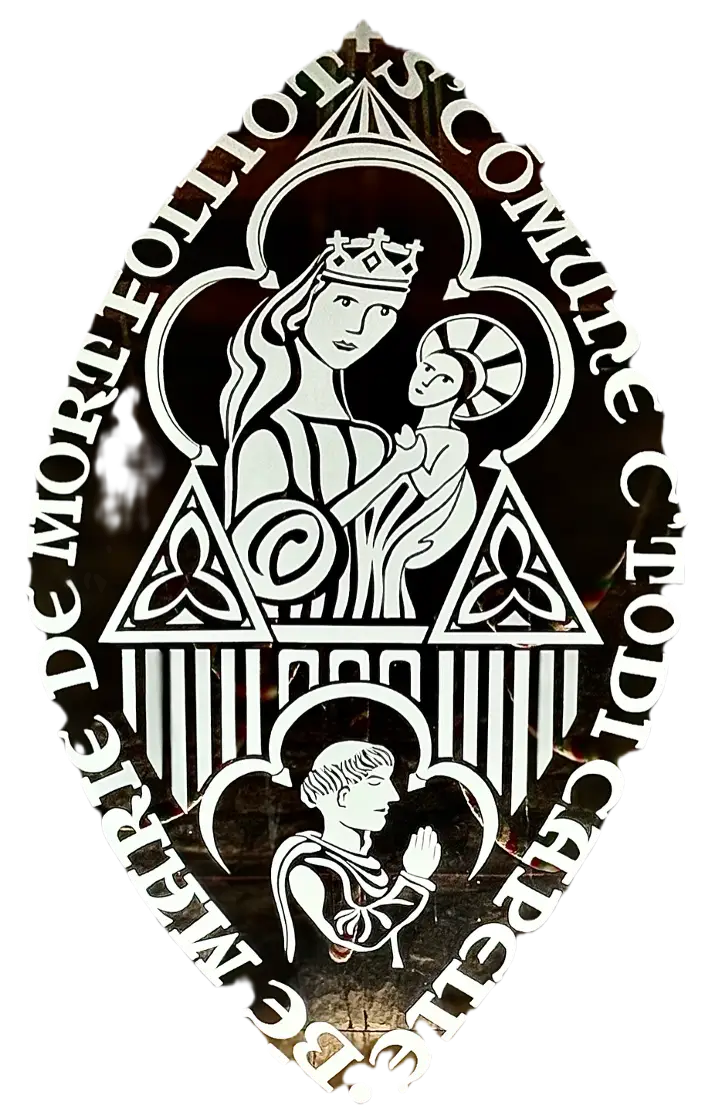
Interestingly, there is evidence that the church may originally have been dedicated to St Mary. A medieval seal discovered near York in 1848 refers to the Chapel of Morton Foliot and appears to identify it as a chapel dedicated to St Mary. Quite how the seal travelled from Castlemorton to York remains a mystery!
A Connection with Westminster Abbey
St Gregory’s also has a surprising historical connection with Westminster Abbey. During the 14th century, following fire damage at the Abbey, the Manor of Longdon and its revenues were eventually appropriated to Westminster to help support its rebuilding.
Documents from the period refer to priests serving Longdon, Chaceley and the Chapel of Morton Foliot. Remarkably, an echo of this medieval relationship survives today, as the appointment of the vicar of St Gregory’s remains subject to the patronage of Westminster Abbey.
Things to Discover
Visitors will find evidence of many different periods of history within St Gregory’s.
The church has an impressive variety of windows, from its earliest round-headed examples to the stained glass of the Victorian period. The east window received its stained glass in 1899, while fragments of much earlier glass also survive.
Two ornate niches high in the north wall of the nave are reputed to have come from Little Malvern Priory following the Dissolution of the Monasteries. The pulpit, designed by Victorian architect William Butterfield and dating from 1858, was brought to Castlemorton from a chapel in Smethwick in 1873.
The font beside the south door has an equally interesting story. Dating from the Restoration period, it originally stood in Deerhurst Church before eventually finding a new home at St Gregory’s. The Lady Chapel also contains what is believed to be the surviving lower section of St Gregory’s original medieval font.
Surviving Times of Change
St Gregory’s has witnessed some turbulent periods of English history, including the Reformation and Civil War. Fragments of early stained glass survive from a time when many church furnishings and decorations were destroyed. The beautiful altar rails date from 1683–84 and may have replaced earlier rails lost during this period.
The church underwent significant refurbishment in 1878–79. The plaster was removed from the walls, the old box pews were altered using much of their original timber, the font was repositioned and the rood screen removed. Fortunately, unlike many medieval churches substantially rebuilt during the Victorian period, much of St Gregory’s ancient character survived.
The Bells
The sound of St Gregory’s bells has echoed across Castlemorton for generations. Today there is a ring of six bells, with the oldest dating from 1695. Following a successful fundraising campaign, the bells and their frame were overhauled and rehung in 2002 and continue to be rung regularly.
A Living Church
Although our building is ancient, St Gregory’s continues to evolve. Recent projects have provided a kitchen and lavatory and, in 2021, created more flexible space for worship, hospitality and community events.
These changes are simply the latest chapter in a story stretching back almost 900 years. Each generation has cared for St Gregory’s and adapted it for those who follow.
Today, St Gregory’s remains first and foremost a living church – a place of worship, prayer, friendship and community. Whether you come to a service, attend an event, explore our history or simply enjoy a few moments of peace within these ancient walls, you are always very welcome.